Built to prove something, then scale it
Education Access Foundation. Working in Ahmedabad schools since March 2025, building for all of India.
India's schools teach children to pass exams. Not to live.
A child can spend 12 years inside a classroom, attending every class, completing every assignment, passing every exam, and step out genuinely unsure how to think through a problem, manage their emotions, communicate clearly, or decide what they want from life.
This is not a fringe failure. It is the experience of millions of students across India. The problem is not that schools fail to teach. The problem is that schools have never been intentional about what children should actually learn for life.
Indian graduates are not job-ready (India Skills Report 2026)
Hours a child spends inside school. Hours that could change everything.
That silence is the problem EFAS exists to break: not by arguing the system should change, but by proving inside real classrooms, every month, that it can.
From one person in five schools to a growing organisation
EFAS was started in 2024 by Sharan Rajput, a Teach For India fellow who spent his fellowship teaching Grade 3 in a government school in Ahmedabad and watching transformational classroom work fail to scale. The organisation began working in schools in March 2025 and was registered as Education Access Foundation, a Section 8 company, in January 2026.
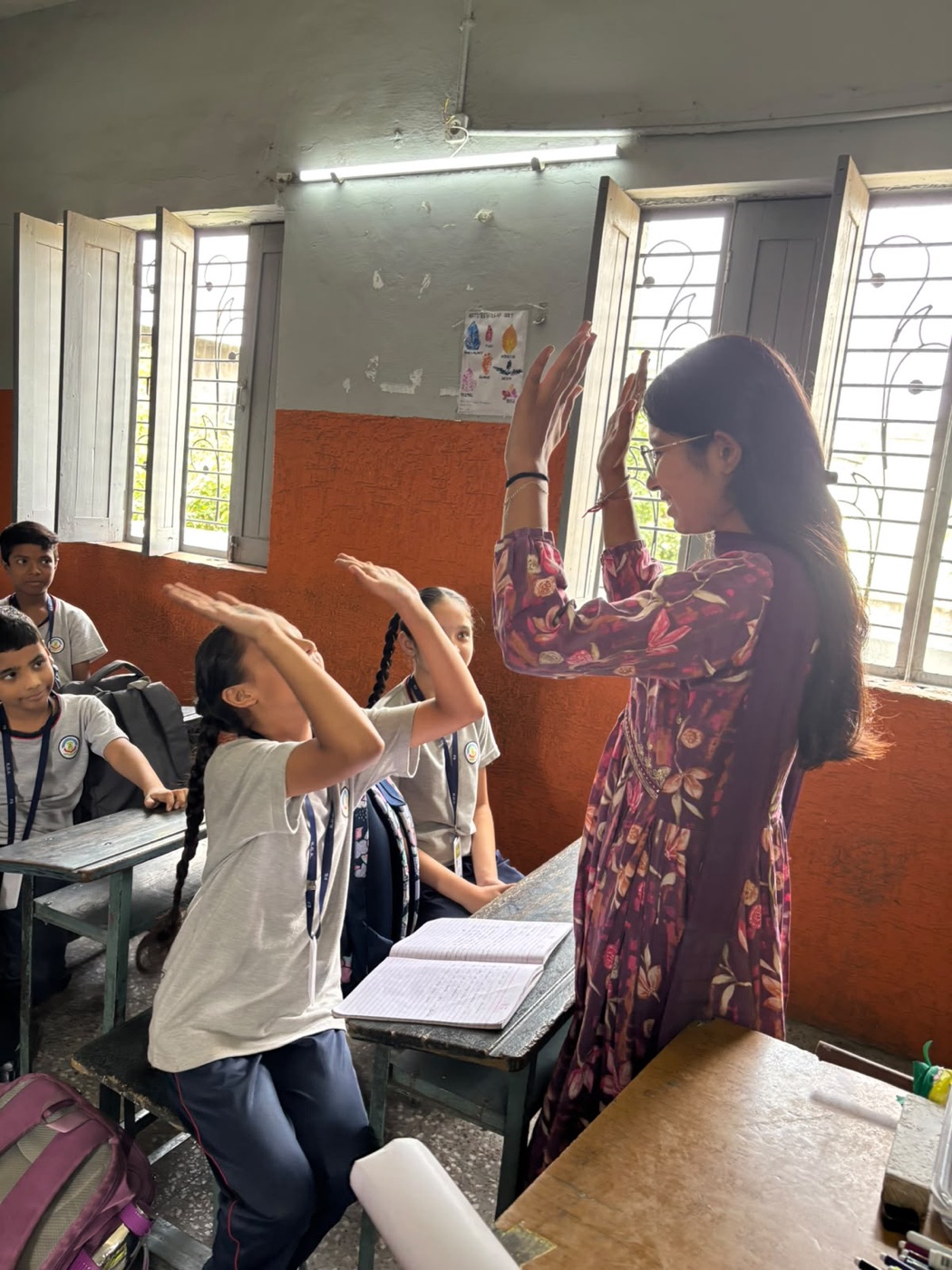
The first year was run largely solo: one person, five schools, about 1,700 children. It answered the three questions every proof of concept must answer: Can we get schools to say yes? Can we deliver what we promised? Is there something here worth scaling? The answer to all three was yes.
The second year is about building the organisation around what works. Five partner schools, a team of Program Managers, and a formal child-level data system in development. About 920 children enrolled across 23 classrooms.
The principles behind every decision we make
Sharan Rajput
Sharan grew up in a family of educationists. He studied in one of the better schools in his town, followed the rules, scored well, and did everything a good student was supposed to do. Then spent years after school figuring out the basics: how to think through a decision, manage himself, navigate a world school had never prepared him for.
A Teach For India fellow, he saw transformational classroom work happen and then fail to scale. EFAS is his attempt to build the version that does. Starting in Ahmedabad, built on evidence, designed from the beginning to be simple enough to grow.